A walkthrough stone.
From the parking lot through the thuja grove, into the stele garden, past the Hyangsan pavilion, and onto the Bullo-dong tumuli — five stages that shape the way this place is read.
Read the stone twice — once while walking toward it, once while walking away.
- 01Start — Parking
Wind · distant birdsong
Where the pace eases
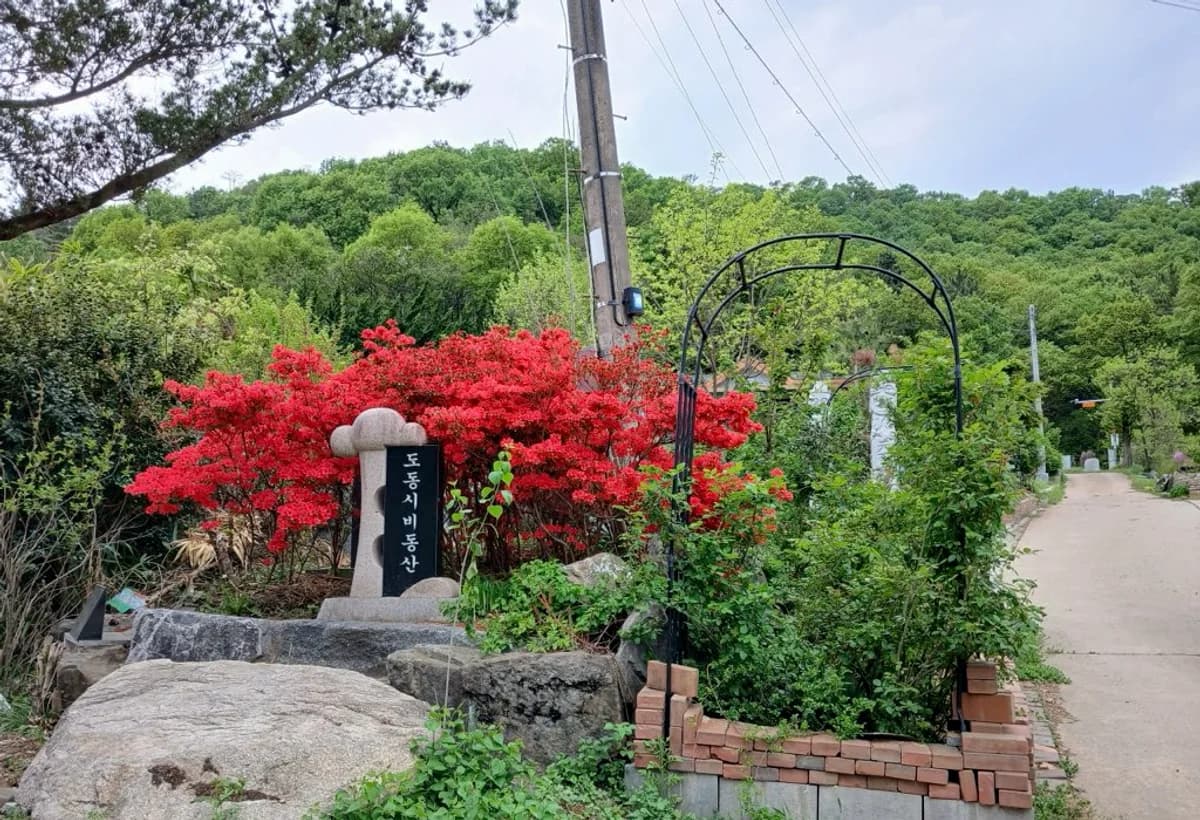
Your walk begins at the parking area near the poetry stele garden. Step out, and the wind from Palgongsan reaches you before anything else, carrying the rustle of a thousand cypress leaves. On the threshold stones, the names of those who remember the poems are carved.
Do not hurry. This is not a pilgrimage to finish quickly. Tie your shoes again, and take one long breath.
- 02Entry — Thuja Grove
Leaf rustle · earth scent
Between trees that stood a thousand years
Turn left from the parking area and walk about 200 meters. The thuja grove — Natural Monument No. 1 of Korea — opens like a gate. Climbing the stone steps, mature cypress-cedars taller than any adult line both sides of your path.
Touch a thuja leaf. It is soft and firm at once. A faint woody scent mixes with the humid air sliding down from Palgongsan. These trees have stood here longer than any of the stele.
- 03Heart — Stele Garden
Plum fragrance · pine wind · moonlight on stone
Voices carved in stone
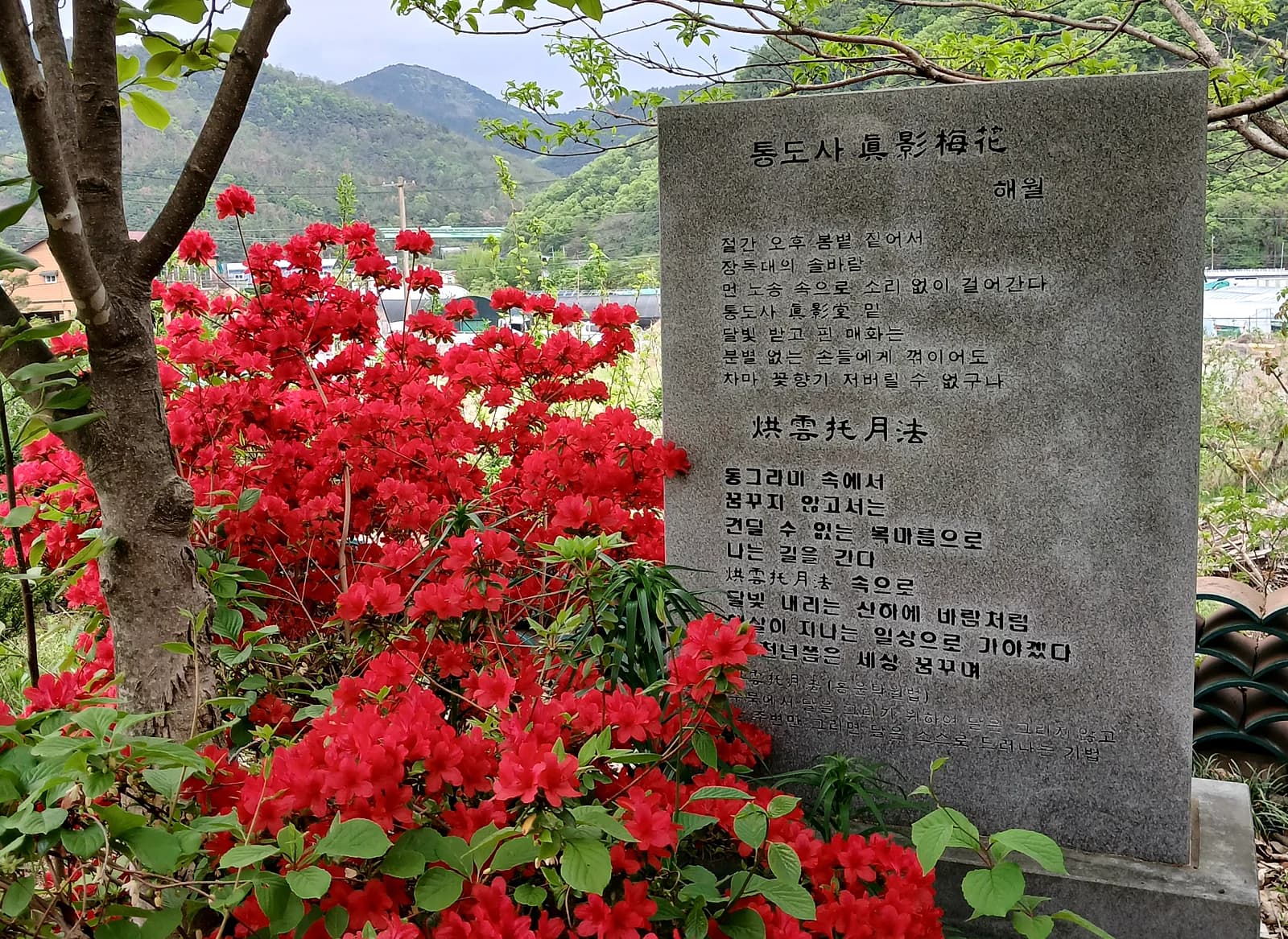
Beyond the grove, on open ground, the granite stele stand in a quiet procession. The stele in this photograph carries Haewol's "Tongdosa Jinyeong Maehwa." Between red azaleas and mountain light, the poem brings Tongdosa's plum blossoms, spring sun, and pine wind into this garden.
Stand before a stone and read slowly. The inscription moves through an afternoon temple, a breeze by the jars, plum blossoms under moonlight, and the phrase "烘雲托月法" — the old method of revealing the moon by painting the clouds around it.
- 04Pause — Hyangsan Pavilion
Wood · wind-chime
A pavilion where the wind settles
Near the stele, the Hyangsan pavilion (향산정) rests under an octagonal roof. Sit on its wooden floor, stretch your legs. Air moves under the rafters, bringing distant leaf-rustle with it.
Let a single poem return to you here. It will sound different than it did on first reading. The stele are not only read while walking — they are read while staying, too.
- 05End — Bullo-dong Tumuli
Distant cicada · dew on grass
Beside those who came before
Five to ten minutes north of the pavilion brings you to the Bullo-dong tumuli — low, rounded burial mounds from the Silla period.
Arriving here after reading the stele, you understand how the poets and those who lived here long before them rest on the same plot of ground. Literature is a form of memory, and memory is always bound to earth.
The pilgrimage ends. On your way back through the thuja grove, the wind between the leaves will no longer sound the same.
The stone remembers you.
Having walked the tour, read the stele in full on the site, or browse the records left by the literary tour community.